Capable isn't the same as okay.
I work with people in the creative industries. People who've learned to keep going long after the body said stop. Here is where that changes … your body stops being something you override and starts being somewhere you can actually live.
Twenty years inside the industry taught me what it takes to survive it, and what it costs. The music world runs on adrenaline and late nights and the particular pressure that becomes invisible because everyone around you is carrying it too.
The creative industries draw in neurodivergent minds: ADHD, autistic and highly sensitive nervous systems that thrive on intensity and then pay for it. I work with that wiring, not against it.
Burnout doesn't announce itself. It arrives slowly, then all at once. The thing you built your life around starts to feel like an obligation.
You don't need to perform your recovery here.
One trauma-informed session that follows you, not a fixed plan, drawing on talk therapy, somatic work, breathwork, NSDR and sound. You leave with a settled body, and the head follows.
Five sessions that give what needs attention room to surface. We work with what's actually there, through Client-Centred talk, Gestalt, Somatic Experiencing, sound, breathwork and NSDR.
Twelve sessions built to catch burnout before it catches you, starting with sleep, tension and the early signals you've learned to override. From there we build what holds: regulation, rhythm and limits your body can trust.
Regular sessions, weekly, fortnightly or as needed, for as long as they're useful. The work moves with you: talk when you need to talk, body when words run out, rest when that's the work.
An eight-week group programme backed by thirty years of clinical research on stress, anxiety, burnout and chronic pain, held by someone who knows the pressures of music and creative work. No meditation experience needed, only the willingness to show up.
I travel with artists and bands as nervous system support, working with sleep, somatic regulation, breathwork and NSDR between shows and in the quiet hours. This isn't recovery, it's maintenance.
NSDR stands for Non-Sleep Deep Rest. It's the modern name for Yoga Nidra, the yogic "sleep" practice that's been around for centuries. You lie down. I guide you through the body, the breath, the edge between waking and sleeping. You stay awake enough to follow and deep enough to let go.
Most people leave feeling like they've had a nap. Settled, clearer, softer around the edges.
Research is still growing, and points to benefits for stress, anxiety, sleep and pain. It's a good companion to therapy, not a replacement for it. I practise it myself, so I know what it can do.
Book intro callIf you're ADHD, autistic or highly sensitive, you've probably been told to "just meditate." Sit still. Clear your mind. In silence. For many of us, that's the hardest possible instruction.
NSDR works differently. It's guided, so your mind has something to follow: a voice, a map of the body, a sound. There's nothing to get right. You don't have to quiet your thoughts. They can run, and you still rest.
For people who've learned to override the body, the slow body scan is a way back in. No forcing, no performing. Just noticing, one part at a time.
And if your work depends on your nervous system, you can't run it flat out and expect it to keep giving. Rest isn't a break from the work. Many of my clients find that ideas loosen and creative block eases when the system finally stops bracing.
NSDR is increasingly used alongside trauma work. A programme for survivors of sexual trauma at the Tacoma VA reported meaningful relief of symptoms from Yoga Nidra.
Trauma lives in the body, and the body doesn't always respond to words. NSDR lets it practise safety at its own pace. Nothing is asked of you. You can keep your eyes open, change position, or stop at any point. You stay in charge of the experience.
It supports therapy, it doesn't replace it. In my sessions, it sits alongside the rest of the work.
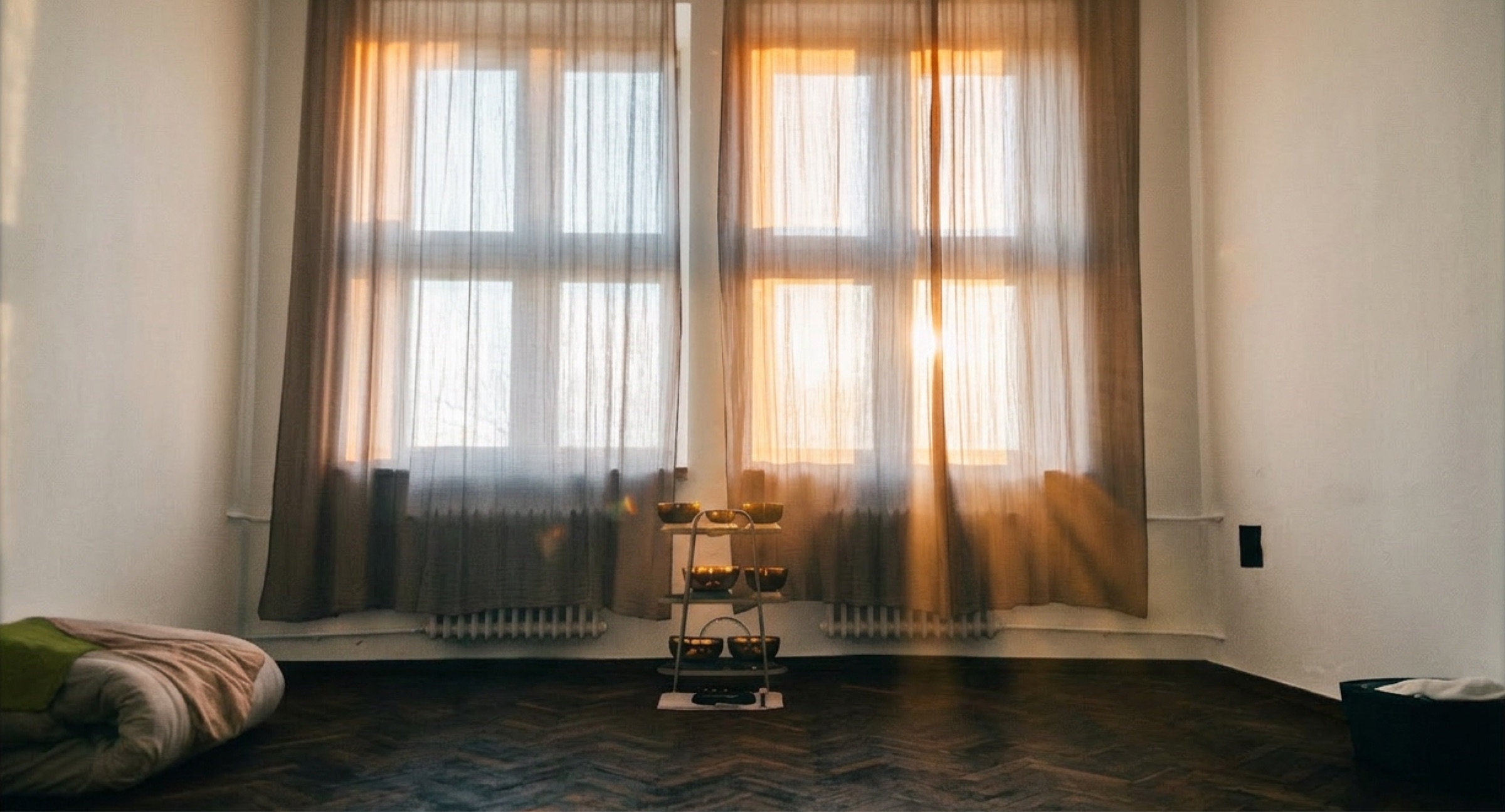
I work with ambient soundscapes and Tibetan sound bowls. The soundscapes build a space that feels safe and held. The bowls give the mind one long, slow tone to rest on, and you feel their vibration in the body before you've thought about it. Sound reaches the nervous system faster than words do, so you drop in sooner and stay longer.
NSDR & Ambient Session
Q&A with Ambient Listening Session
SleepOver Concert
I ran an international artist agency. I directed a record label. I worked as HR and Executive Partner at Native Instruments. I know what this world demands of people. I've sat in every seat in the room.
I also know what it costs. I trained as a humanistic therapist because I wanted to understand the cost properly and offer something that actually meets it. My approach is integrative: Client-Centred Communication, Gestalt, Somatic Experiencing, Sound Therapy, Breathwork, NSDR, Meditation. Each modality has a purpose. Nothing is decorative. The work is also cycle-informed: a body that runs on a monthly rhythm shouldn't be asked to perform on a flat line.
I work with creatives navigating anxiety, creative block, burnout, and the identity shifts that come with long careers in high-pressure environments. I support women in the industry and neurodivergent minds in particular, people who often carry far more than they show. If you work in music, or live like you do, you'll recognise what I'm describing.
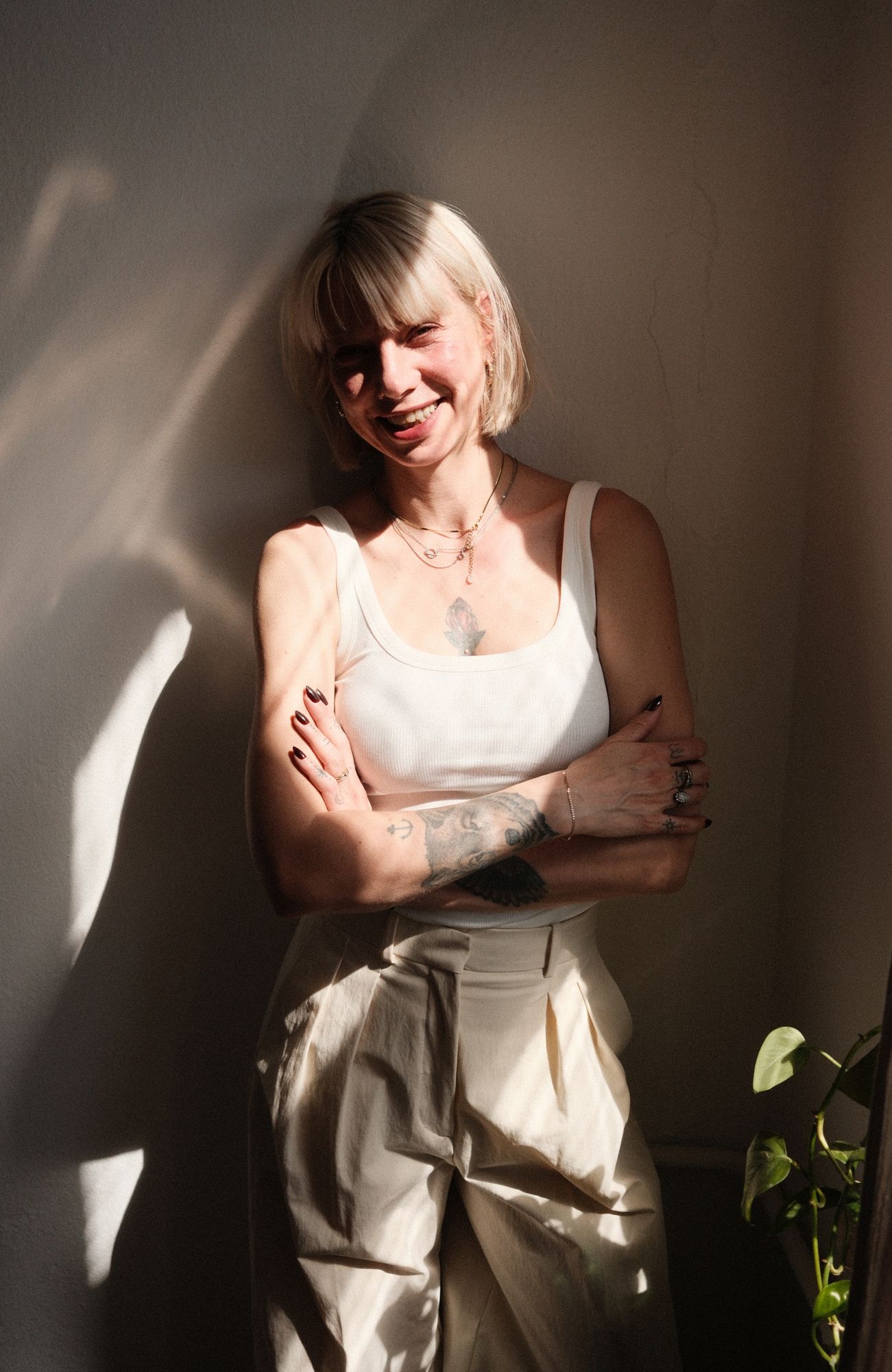
Jana-Berit Osborn · Humanistic Psychological Counsellor · Somatic Practitioner · Sound Therapist · Berlin
Start with a free discovery call. No pressure, no pitch: just a conversation about where you are and whether this is the right fit.